Problem.
Generative image tools give you a different person every time you ask. Ask for a headshot on Monday and a banner on Friday and you get two faces that are nearly the same, which is worse than two that are obviously different. Prompts are a poor place to store a likeness: every adjective is an invitation to drift, and the details that make a face recognizable are exactly the ones that get averaged away. What was missing was a canon. One sheet that settles the face, the build, the wardrobe and the colours, so the next image is a lookup rather than a negotiation.
Approach.
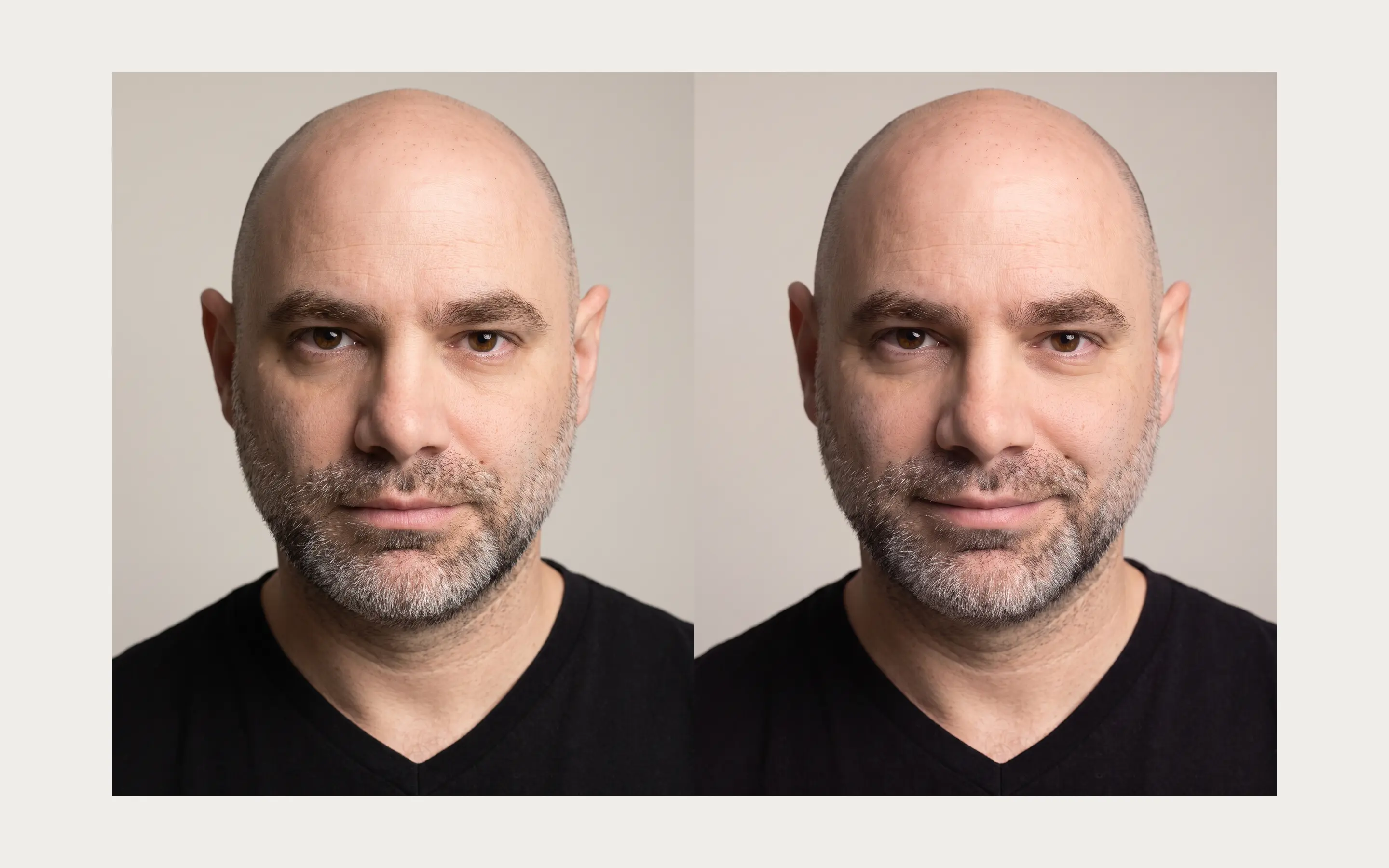
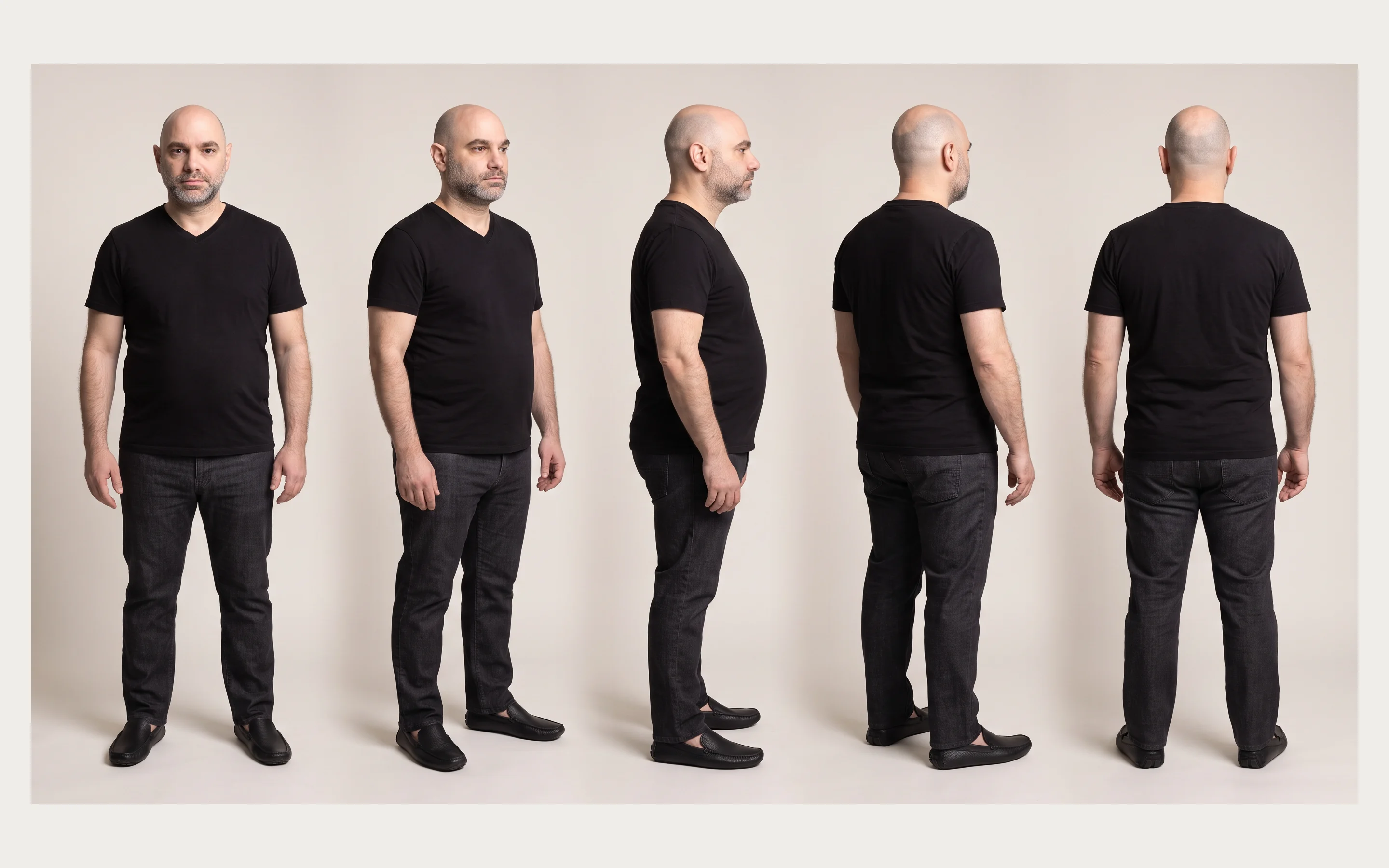
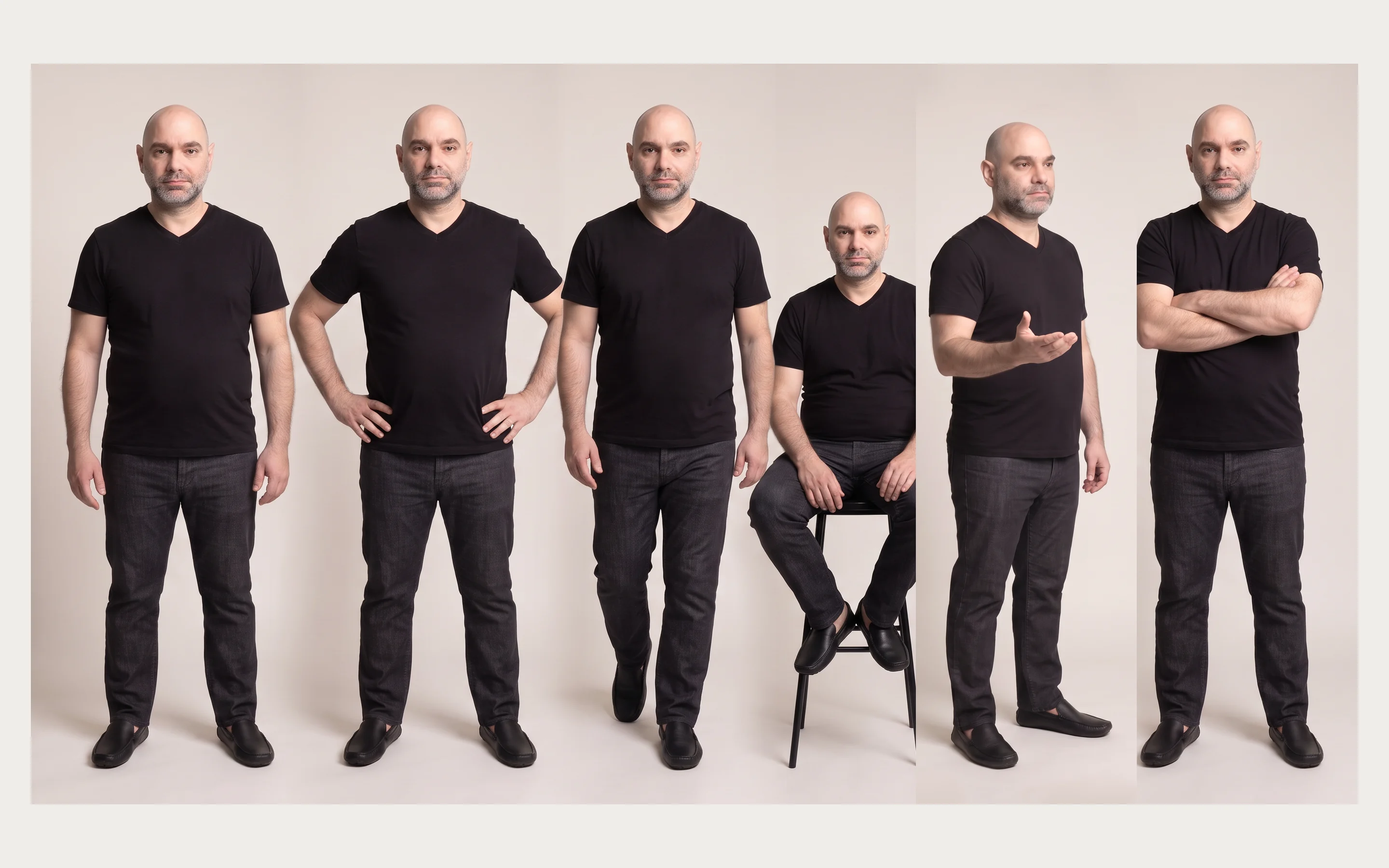
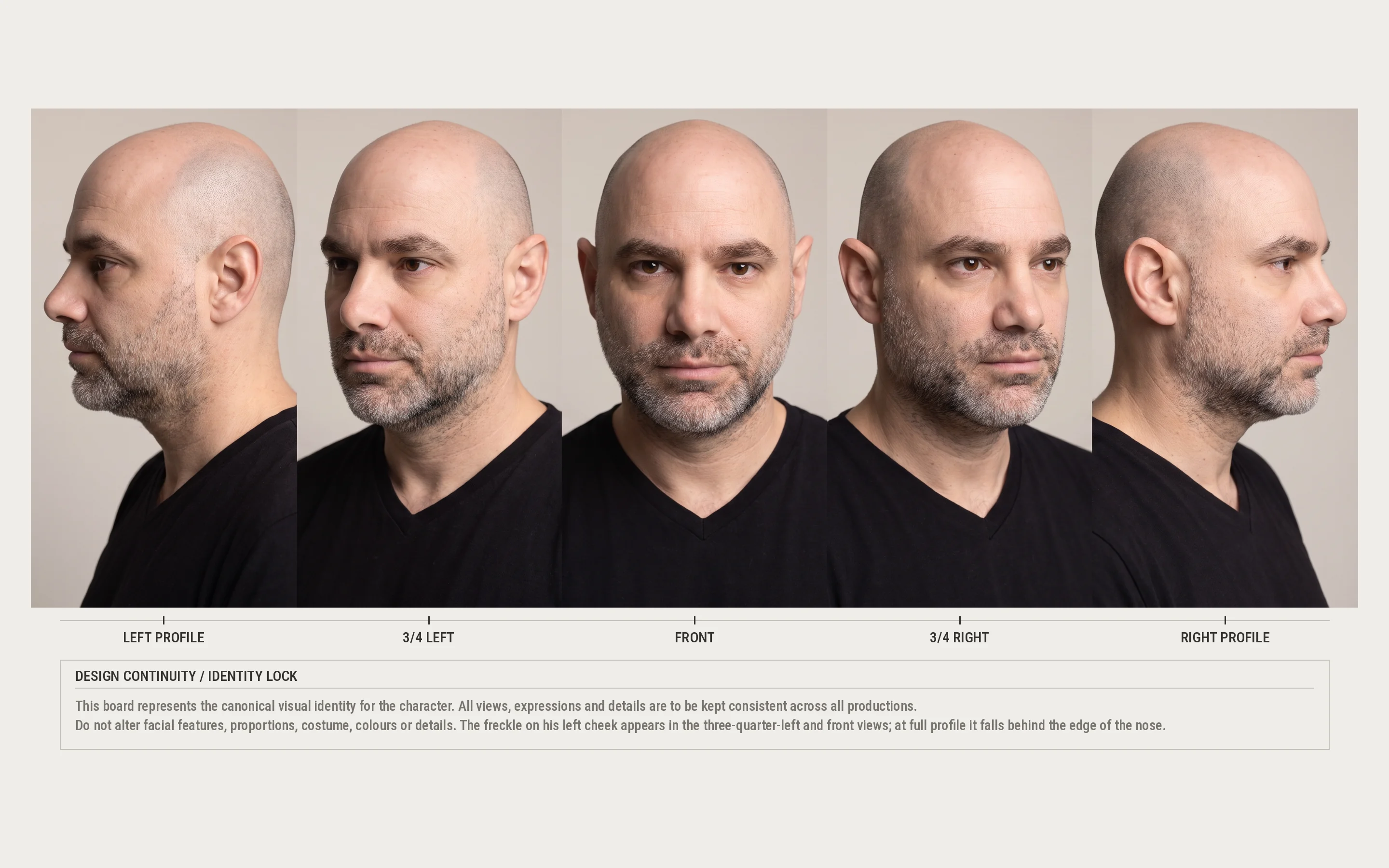
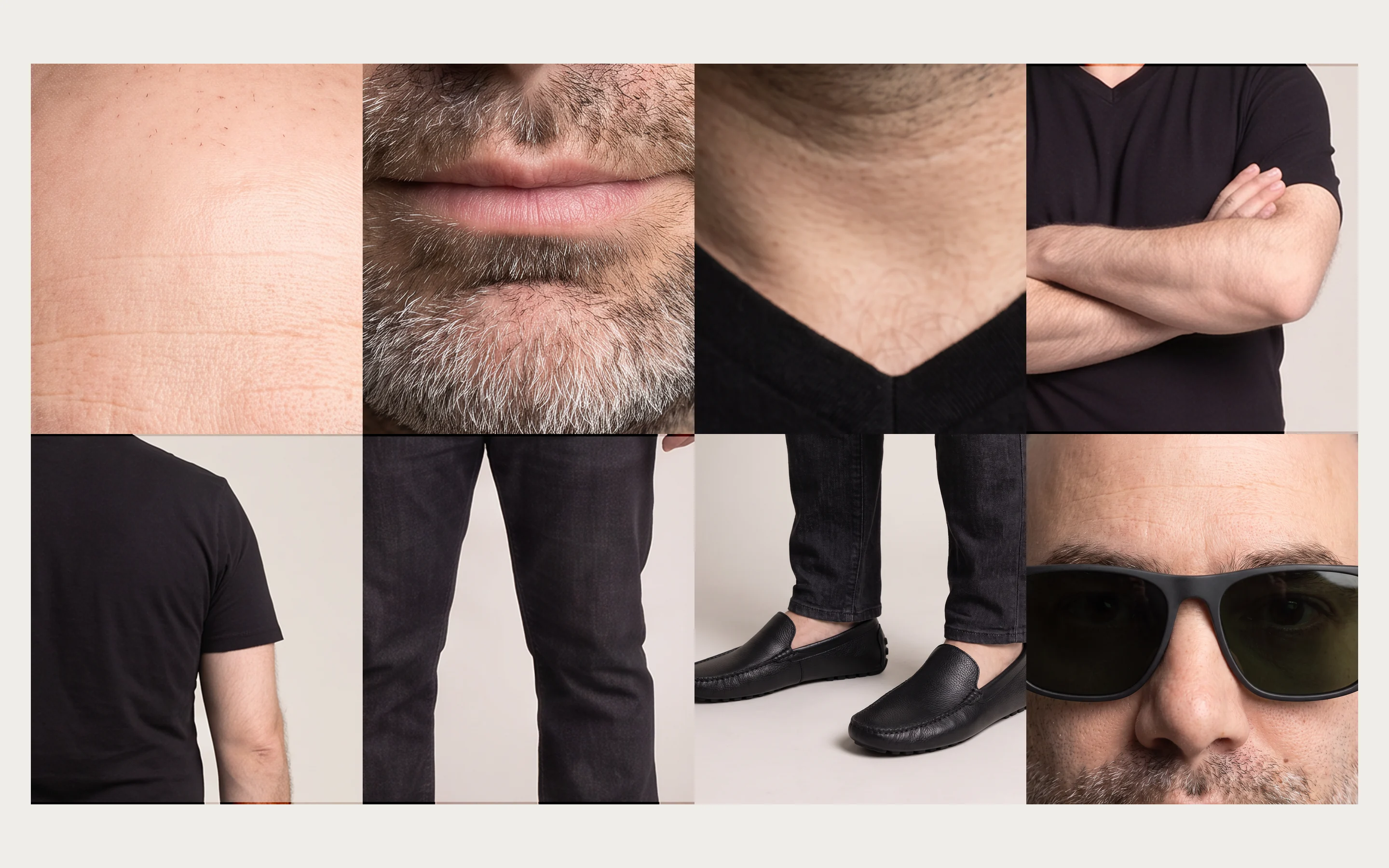
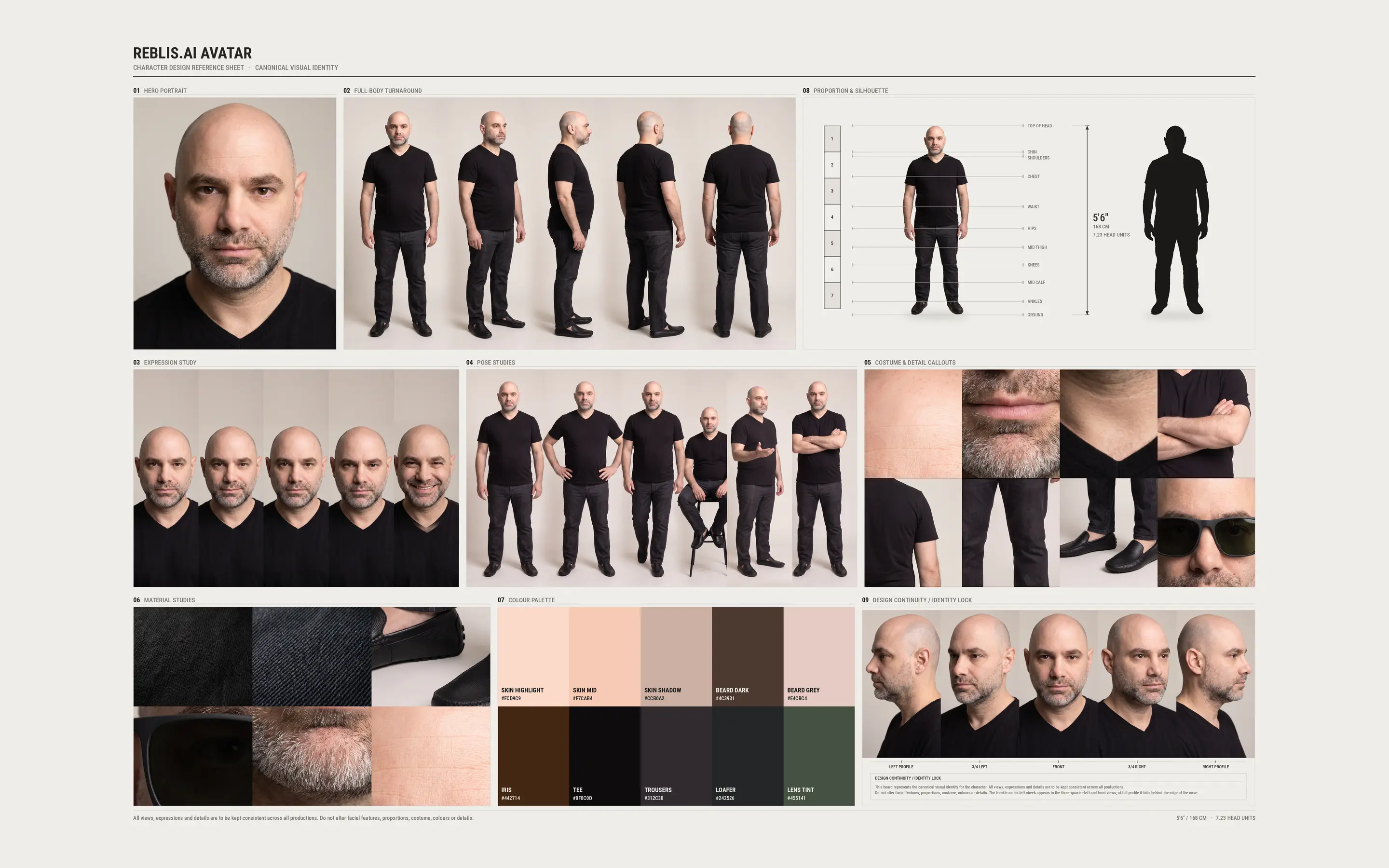
Nine panels, built in order, each one anchored to the one before it: hero portrait, full body turnaround, expression study, pose studies, costume and detail callouts, material studies, colour palette, proportion guide, identity lock. The hero portrait is the authority. Everything downstream is generated against it rather than against a description of it.
Only five of the nine were generated at all. The palette samples real pixels out of the approved panels, using an annulus around the iris landmark so the reading is iris and not pupil, and a luminance band on the near black garments so it is fabric and not a highlight. The proportion guide is drawn programmatically from a matte, which is also where the measured head to body ratio of 7.23 comes from. Half the detail and material callouts are native crops of panels already approved. Cropping approved material is free and consistent by construction, which beat generating every time.
The hard part was a single freckle on the left cheek. Three attempts to place it by describing it landed in three different wrong spots, so it stopped being a prompt and became a tool: its position is stored in an affine frame built from three landmarks on that side of the face, then applied as a luminance delta so each target keeps its own skin tone. That frame survives scale, position and expression, including a full smile. Faces are now generated with deliberately clean skin and the mark is composited afterwards.
Outcome.
The sheet is finished at 5760 by 4078, with the nine panels composited on justified rows: row height is the content width divided by the sum of that row's aspect ratios, so nothing is ever stretched and the layout re-solves itself if a panel changes. Six reusable tools came out of the build, along with a written canon that records the things worth not relearning, including the fact that the face is slim while the body is not.
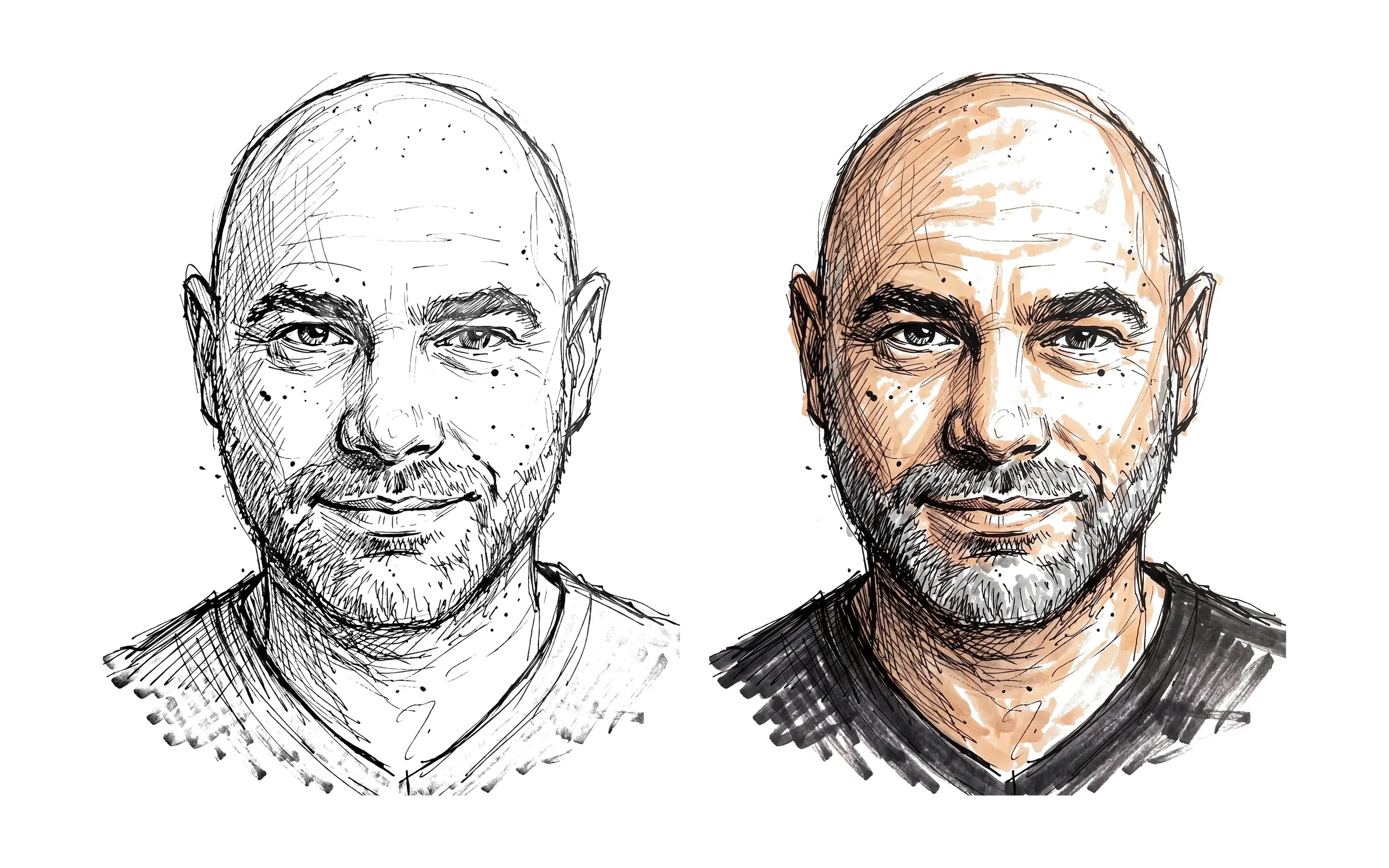
It is already doing its job. The dip pen portrait in this site's own hero is drawn from the sheet's second hero portrait, in matched ink and marker versions, one for each theme.
Gallery.